

One of the significant aspects that moving to a new country entails is your budget. A cost-of-living analysis is the surest way to get the numbers right. If you’re wondering what this entails, you’ve come to the right place.
In this blog, we have broken down every aspect of living costs to provide you with a realistic comparison of the cost of living in Australia vs the UK. This way, you can estimate your living costs in Australia should you be relocating soon.
Whether you’re considering a permanent move, planning an extended work assignment, or simply exploring your options, understanding the financial implications is crucial.
From housing and groceries to transportation and entertainment, we’ll cover all the essential categories to help you make an informed decision about your international relocation.
General Cost Overview
There are several aspects to consider when comparing the cost of living between two countries. This general overview will give you an idea of the factors involved.
The table below provides a snapshot of key expenses you’ll need to budget for when relocating from the UK to Australia, covering everything from education costs to monthly utilities.
| Item | Australia (AUD) | UK (GBP) |
| International Tuition Fees (Bachelors) | A$20,000 to 45,000 per year (£9,850 to £22,170 per year) | £11,400 to £38,000 per year |
| International Tuition Fees (Masters) | A$22,000 to 50,000 per year (£10,830 to £24,630 per year) | £9,000 to £30,000+ per year |
| Student Halls | ~A$920 to A$1,900 per month (£450 to £940 per month) | £ ~£560 to £900+ per month nationally (London commonly higher)to 600 per month |
| Private Lets (One-bedroom apartment) | ~A$2,500 to A$3,000+ per month (£1,230 to £1,480 per month) | ~£1,300 pcm UK-wide |
| Utilities (Gas, Water, Electricity, Internet) | A$240 to A$360/month (£120 to £180 per month) | £230 to £260/month (includes TV licence) |
| Groceries | ≈A$320 to A$480/month (£160 to £240 per month) | ~£180 to £250/month |
| Public Transport | A$30 to A$70 per month (£15 to £35 per month) | £60 to £120/month |

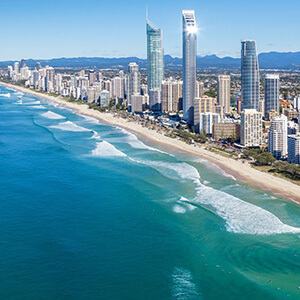
Whether you’re seeking accommodation for yourself or your family, housing is a top consideration in your cost of living analysis. Housing prices in the UK and Australia are almost at par, both renowned worldwide for their soaring price tags. But the latter’s seafront properties, especially along the Gold Coast, are highly sought after!
Property markets in both countries have experienced significant growth over the past decade, with major cities seeing particularly steep increases. While London remains one of the world’s most expensive property markets, Australian cities like Sydney and Melbourne aren’t far behind.
However, the Australian property market often offers more space for your money, with larger homes and gardens becoming more common as you move away from city centres.
Renting in Australia vs the UK
The decision between renting and buying when moving between countries is difficult. Renting is a popular choice, allowing for short-term and spontaneous accommodation options upon arrival. Many expats choose to rent for the first 6-12 months to familiarise themselves with different neighbourhoods before committing to a property purchase.
| Item | Australia | UK |
| 1 Bedroom Apartment in the City Centre | A$2,152 (£1,060) | £1,013 |
| 1 Bedroom Apartment outside the City Centre | A$1,670 (£820) | £831 |
| 3 Bedroom Apartment in the City Centre | A$3,524 (£1,740) | £1,703 |
| 3 Bedroom Apartment outside the City Centre | A$2,680 (£1,320) | £1,349 |
Buying a House
If you’re eager to set down roots wherever you end up, it’s important to consider costs before getting your hopes up. Your specific location within each country will affect house prices dramatically, so you’ll need to check out local estate agents for more accurate information.
When purchasing property in Australia, you’ll need to factor in additional costs beyond the purchase price, including stamp duty (which varies by state), conveyancing fees, building and pest inspections, and potential mortgage costs.
Foreign buyers may also face additional restrictions and charges in some Australian states. It’s advisable to work with both a local real estate agent and a solicitor who understands the specific requirements for international buyers.
| Item (Price Range) | Australia | UK |
| Apartment in Prime City Centre | A$700,000 to A$3,500,000+ (~£345,000 to £1,725,000+) | £500,000 to £3,000,000+ |
| Apartment outside the City Centre | A$300,000 to A$1,200,000 (148,000 to £591,000) | £150,000 to £800,000 |
Utility Bills in Australia vs the UK
Another key aspect to consider is whether bills will be manageable within your new income down under. Here we break down some average estimated monthly costs for basic utilities, phone plans and internet.
Australian utility costs can fluctuate significantly depending on the season, particularly for cooling costs during the hot summer months. Air conditioning usage can substantially increase electricity bills from December through February.
Many Australian homes rely on solar panels to offset electricity costs, which is worth considering if you’re purchasing a property.
| Item | Australia | UK |
| Basic (Electricity, Heating, Cooling, Water, Garbage) for 85m2 Apartment | A$300 to A$400 / month (£150 to £200) | £230 to £260 / month |
| Mobile Phone Monthly Plan with Calls and 10GB+ Data | A$35 to A$55 / month (£17 to £27) | £15 to £25 / month |
| Internet (60 Mbps or More, Unlimited Data, Cable/ADSL) | A$75 to A$95 / month (£37 to £47) | £28 to £40 / month |
Food Prices in Australia vs the UK
The comparison of food prices between the two nations is a little difficult due to how much shopping habits differ from person to person. Many studies claim that the UK offers better value for money on fresh produce and everyday purchases. If you move to Australia, you might find that imported and processed foods will cost you more than in the United Kingdom.
Australia’s geographic isolation means that many imported goods carry a premium price tag. However, locally produced Australian products, including fresh seafood, lamb, and tropical fruits, can often be found at competitive prices.
Shopping at local farmers’ markets can offer significant savings on fresh produce compared to supermarket chains.
Grocery Prices
Groceries may not seem important, but they can be valuable when considering your daily costs and your larger monthly outgoings when you’re planning a move across the globe. The costs of daily groceries tend to be around the same for both countries, so this shouldn’t deter you from moving to Australia.
| Item | Australia | UK |
| Milk (regular), (1 litre) | A$2.43 (£1.20) | £1.05 |
| Loaf of Fresh White Bread (500g) | A$3.82 (£1.88) | £1.10 |
| White Rice (1kg) | A$3.13 (£1.54) | £1.40 |
| 12 Eggs | A$6.92 (£3.41) | £2.80 |
| Local Cheese (1kg) | A$13.71 (£6.75) | £6.50 |
| Chicken Fillets (1kg) | A$12.93 (£6.37) | £7.00 |
| Ground Beef (1kg) | A$21.03 (£10.36) | £10.00 |
| Apples (1kg) | A$4.96 (£2.44) | £2.80 |
| Bananas (1kg) | A$4.26 (£2.10) | £1.50 |
| Potatoes (1kg) | A$3.87 (£1.91) | £1.40 |
| Onions (1kg) | A$3.34 (£1.65) | £1.30 |
| Bottle of Wine (Mid-Range) | A$20.00 (£9.85) | £9.00 |
Restaurants
Living in a new place shouldn’t mean you never leave the house! We’ve included rough prices for going out to eat in Australia and the UK – note that these can vary incredibly depending on where you are in the country. For example, London will be considerably pricier for meals out than in Manchester.
Australia has a vibrant café culture, and dining out is a popular social activity. BYO (Bring Your Own) restaurants are common, allowing you to bring your own wine or beer, which can significantly reduce dining costs.
Tipping is not mandatory in Australia, unlike in many other countries, which can make restaurant bills more predictable.
| Item | Australia | UK |
| 3-course Meal for 2 People, Mid-range Restaurant | A$150 (£74) | £87 |
| McDonald’s McMeal (or Equivalent) | A$15 (£7.40) | £8.00 |
| Beer (0.33 litre bottle) | A$7.20 (£3.55) | £4.50 |
| Cappuccino (regular) | A$5.45 (£2.68) | £3.30 |
| Coke/Pepsi (0.33 litre bottle) | A$4.06 (£2.00) | £2.00 |
| Water (0.33 litre bottle) | A$3.20 (£1.58) | £1.40 |
Transportation Costs in Australia vs the UK
Comparative cost of living analysis in Australia vs the UK reveals Australia to be relatively cheaper. On average, Aussies pay around £0.50 per litre less on petrol than Brits. Car prices are also about 35% cheaper in Australia than in the UK, although this varies by model.
Public transport networks in Australian cities vary considerably in quality and coverage. While Sydney and Melbourne have extensive train and tram networks, many Australian cities are more car-dependent than UK cities.
Perth and Brisbane, in particular, have limited public transport options outside the city centre, making car ownership almost essential for many residents. However, the lower costs of petrol and vehicle purchase can offset this requirement.
| Item | Australia | UK |
| One-way Ticket (Local Transport) | A$5.10 (£2.50) | £2.80 |
| Monthly Pass (Regular Price) | A$170 (£84) | £73 |
| Taxi Start (Normal Tariff) | A$6.30 (£3.10) | £3.80 |
| Taxi 1km (Normal Tariff) | A$3.20 (£1.58) | £1.80 |
| Gasoline (1 litre) | A$2.05 (£1.01) | £1.45 |
| Volkswagen Golf 1.4 90 KW Trendline (Or Equivalent New Car) | A$38,000 (£18,720) | £25,500 |
| Toyota Corolla Sedan 1.6l 97kW Comfort (Or Equivalent New Car) | A$35,500 (£17,490) | £25,000 |
Childcare Costs
Childcare is a key factor in a cost-of-living analysis. International schools tend to be slightly more expensive in the UK than in Australia.
Australia offers a childcare subsidy system that can significantly reduce costs for eligible families. The Australian government provides subsidies based on family income, with some families receiving up to 90% of childcare costs covered.
Additionally, public schools in Australia are free for permanent residents and citizens, though many expat families opt for private or international schools to maintain continuity in their children’s education.
| Item | Australia | UK |
| Full Day at Private Preschool (Monthly) | A$2,230 (£1,100) | £1,270 |
| International Primary School (Yearly) | A$23,400 (£11,530) | £16,200 |
Recreation Costs
Whether you’re moving to a new country for work or leisure, recreation should be a priority. Both the UK and Australia offer fantastic recreation opportunities, be it sports or culture, although Australia tends to be slightly more expensive.
Australia’s climate allows for year-round outdoor activities, with many beaches, parks, and hiking trails available free of charge. Sports participation is a significant part of Australian culture, with community sports clubs offering affordable membership options.
The country’s focus on outdoor lifestyle means you can enjoy many recreational activities without significant expense.
| Item | Australia | UK |
| Fitness Club, Monthly Fee for 1 Adult | A$83 (£41) | £37 |
| Tennis Court Rent (1 Hour on Weekend) | A$27 (£13) | £12 |
| Cinema, International Release, 1 Seat | A$20 (£10) | £11 |
Cost of Living in Sydney vs London
There’s no better way to estimate the cost of living in Australia vs the UK than by looking at their most expensive cities. Note that these living costs will vary based on your spending habits and lifestyle choices.
Both Sydney and London rank among the world’s most expensive cities, but they offer different value propositions. While London has higher transport and grocery costs, Sydney’s accommodation expenses can be equally challenging.
However, Sydney’s superior weather means lower heating costs, and the outdoor lifestyle can reduce entertainment expenses as many activities are free or low-cost.
| Item (Price per month) | Sydney, Australia | London, UK |
| Student Halls | A$1,250 (£615) | £1,020 |
| Private Lets (One-bedroom apartment) | A$3,150 (£1,550) | £2,000 |
| Utilities (Gas, Water, Electricity, Internet) | A$360 (£177) | £320 |
| Grocery Prices | A$580 (£285) | £370 |
| Public Transport (Monthly Pass) | A$210 (£104) | £174 (Zones 1-2) |

Australian Cities Comparison
To get a realistic estimate of the cost of living in Australia vs the UK, it is imperative to look at the living standards in different Australian cities. This will also help you decide which Australian city might fit your budget. The estimated monthly costs below are for a single person, excluding rent.
- Moving to Melbourne requires a minimum of £830 (A$1,700) per month.
- Moving to Sydney requires a minimum of £985 (A$2,000) per month.
- Moving to Canberra requires a minimum of £715 (A$1,450) per month.
- Moving to Brisbane requires a minimum of £715 (A$1,450) per month.
- Moving to Adelaide requires a minimum of £665 (A$1,350) per month.
Each Australian city offers its own unique lifestyle and cost profile. Melbourne is known for its arts and culture scene, Sydney for its harbour and beaches, Brisbane for its subtropical climate and outdoor lifestyle, while Adelaide offers a more relaxed pace and lower costs.
Perth, though geographically isolated, offers high salaries in the mining sector and excellent weather. Consider not just the cost but also the lifestyle factors when choosing your destination.
Why Choose Gerson Relocation for Your Move to Australia?
Understanding the cost of living is just the first step in your international relocation journey. At Gerson Relocation, we’ve been helping individuals and families move to Australia for over 60 years, providing comprehensive support throughout every stage of your relocation.
Our experienced team understands the financial pressures of international relocation. We work with you to create a realistic moving budget, coordinate shipping schedules to minimise storage costs, and provide expert advice on timing your move to optimise currency exchange rates.
Our partnerships with financial institutions can also help you establish banking and currency exchange facilities before you arrive.
We offer tailored services, including:
- Comprehensive pre-move consultations to help you budget accurately for your relocation
- Flexible shipping options to suit your timeline and budget
- Expert customs clearance to ensure your possessions arrive smoothly
- Comprehensive insurance coverage for peace of mind
- Destination services to help you settle into your new Australian home
With our extensive network and decades of experience, we make your transition to Australian life as smooth and cost-effective as possible.
Frequently Asked Questions About Cost of Living in Australia
If you’re thinking about making the move to Australia, it’s likely you’ve got lots of questions about what to expect when it comes to the cost of living. Here are some answers to the things we’re most commonly asked by our clients.
Is it cheaper to live in Australia or the UK?
The answer depends largely on where you live in each country and your lifestyle choices. Overall, costs are quite comparable between the two nations. Australia typically offers cheaper petrol, vehicles, and dining out, while the UK tends to have lower grocery prices and public transport costs. Housing costs are similarly high in major cities of both countries. Sydney and Melbourne are comparable to London in terms of overall expenses, while regional Australian cities like Adelaide and Brisbane can be more affordable than their UK equivalents.
What salary do I need to live comfortably in Australia?
To live comfortably in Australia, you’ll generally need an annual salary of at least A$70,000-80,000 (£35,000-40,000) for a single person, or A$100,000-120,000 (£50,000-60,000) for a family. This allows for decent accommodation, regular dining out, entertainment, and savings. However, requirements vary significantly by city – Sydney and Melbourne require higher incomes, while in Adelaide or Brisbane, you may be comfortable on less. Your definition of ‘comfortable’ and lifestyle choices will also impact this figure considerably.
How much should I budget for my first month in Australia?
For your first month in Australia, budget at least A$5,000-7,000 (£2,500-3,500) per person beyond your regular monthly expenses. This should cover rental bond (typically 4 weeks’ rent), initial furniture and household items, connection fees for utilities, phone and internet setup, and unexpected costs during settlement. Many people underestimate initial setup costs, so it’s wise to have extra funds available. Consider temporary accommodation for your first few weeks while you search for permanent housing, which provides flexibility but adds to costs.
Are Australian salaries higher than UK salaries?
Yes, Australian salaries are generally higher than UK salaries for equivalent roles. The average full-time salary in Australia is approximately A$95,000 (£47,000) compared to the UK average of around £35,000. Australia also has a higher minimum wage. However, it’s important to note that higher salaries often reflect the higher cost of living in Australian cities. When comparing job offers, consider the after-tax income and cost of living in your specific location rather than just the nominal salary figure.
What are the hidden costs of moving to Australia from the UK?
Beyond the obvious moving costs, several hidden expenses catch UK expats by surprise. These include: higher costs for electronics and technology due to import duties, expensive car registration and insurance (particularly in NSW and Victoria), ongoing visa costs if on temporary visas, private health insurance (often mandatory for visa holders), professional qualification recognition fees if you need to re-register, and the cost of building a new credit history in Australia. Air conditioning running costs can be substantial during Australian summers, and many rental properties require you to pay for all utilities, including water usage, unlike the UK, where water bills are often included.
How does the Australian tax system compare to the UK?
The Australian tax system has both similarities and differences to the UK system. Tax rates are broadly comparable, with both countries using progressive tax brackets. However, Australia doesn’t have National Insurance contributions like the UK – instead, there’s a Medicare Levy of 2% on taxable income. Superannuation (Australia’s pension system) is mandatory, with employers contributing 11% of your salary to your super fund. Tax returns are compulsory for most workers and generally more complex than UK self-assessment. If you’re moving from the UK, you’ll need to understand your tax residency status, as this affects whether you’re taxed on worldwide income or just Australian income.
Our specialised services in moving to Australia will make your transition smooth and seamless. Whether you’d like more information on customs clearance or would like to secure insurance, our professional team is ready to assist you with your international move.
(*All prices are approx. as of January 2026)
Related Posts


